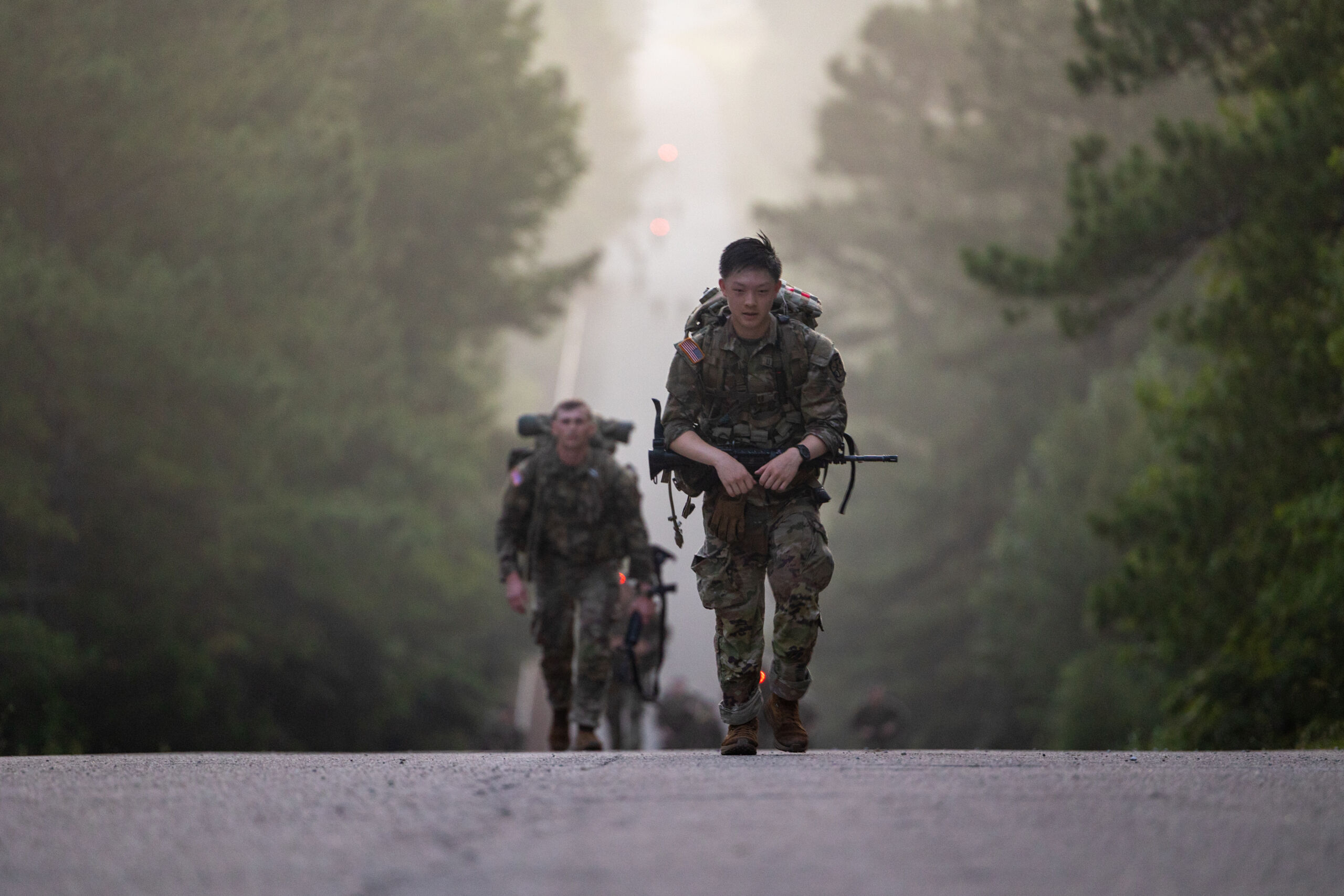
ORT KNOX, Ky.- When cadet Nicolas Gamarra from University of Connecticut assigned to 5th Regiment, Advanced Camp, suffered a career-ending injury in hockey, he persevered through the challenges that came with it.
After dislocating his knee and ending his career in hockey, Gamarra enlisted in the Air Force in 2021. After three years in the Air Force, he realized he wanted to be a leader and made the switch to the Army.
He has been in the Army for a year now, learning tactics, leadership, and teamwork.
“That’s what drove me to join ROTC because everyone’s on the same page; team oriented,” Gamarra said.
For hockey, Gamarra traveled a lot, as well as moving away from home at 16 years old. He learned how to live on his own as he was sleeping in his car and learning how to take rejection and move on to the next team.
He says that the biggest takeaway he got from playing hockey was resilience.
“Resilience is 100% the hardest one and learning and knowing what happened after that injury of mine, I really didn’t want to accept that,” Gamarra said. “Resilience still played a part in that, knowing that I still had more to give, and I think serving is the best way to go.”
He talks about how resilience has to show up in Cadet Summer Training (CST) as well, as you are waking up early, standing around and trying to figure out instructions, and constantly getting evaluated.
“You need to be disciplined as well, knowing that you can push through and keep pushing yourself,” Gamarra said.
Gamarra also had the opportunity to be in a leadership position, assistant captain, at one of his high school teams. There, he learned the leadership style that speaks to him the most.
“You’re going to have to really look in on how your leadership is and you’re going to have to adapt it to the people in the room and who’s listening,” Gamarra said. “They’re not going to adapt to you.”
He also noticed some similarities and differences between hockey and the Army. The biggest difference he noticed between hockey and the Army was the fellowship. For Gamarra, his teammates only really looked out for themselves. But for the Army, it feels like one big team.
“The Army is some real grit and some real raw work that you’re doing,” Gamarra said. “It takes a lot of mental work to actually persevere here.”


About the Author: Mallory Hall