FORT KNOX, Ky. — As cadets begin their ascent, each step up the tower brings a growing sensation of sway and instability. Vertigo sets in. Vision narrows. At the edge of a 64-foot tower with a rope cinched tightly around their waists, they look down.
Heart rate spikes. Palms sweat inside gloves. Boots feel lighter with every passing second. Anticipation builds as fear becomes a mental challenge as much as a physical one.
In those moments, cadets can feel alone in their fear. But halfway down the tower, they look up to see a team cheering them on with simple yet powerful words of encouragement: “I’m proud of you.”
The support of cadre, safety personnel, and fellow cadets reminds them that they are never facing the challenge alone.
Jim Nelson, an air assault and rappel master qualified instructor, is familiar with those feelings.
Nelson guided cadets assigned to 3rd Regiment, Advanced Camp, through the rappelling process while also encouraging them to make conversation to ease tensions and stay grounded. His three pieces of advice: listen to cadre, practice box breathing, and trust the equipment.
“These ropes are meant to be used in sling load operations, which is pulling up a vehicle under a helicopter,” he said. “There isn’t any cadet that comes through here that will not be held up by the rope.”
After hearing this, Cadet Leyna Tran, University of Texas at Austin, found more faith in her equipment and realized the experience is just as much about trusting others as it is trusting herself.
For Tran, it was her first time rappelling — especially at such intimidating heights. Though self-doubt crept in, she pushed through by repeating to herself, “I’m okay, I’m okay, I’m okay.”
“Not only do you have to trust yourself, but you also have to push yourself in trusting your peers,” Tran said. “When it comes to lanes, it’s never a one man job.”
When her boots finally touched the ground, relief set in. Taking a deep breath, she realized she had faced her fear head-on.
In that moment, Tran felt a sense of appreciation toward ROTC and her platoon. Through early wake-ups, field training, heat and shared challenges, they have all become a close-knit community.
“That’s what I love about ROTC — you’re never alone,” Tran said, “You’re always going to have someone supporting you.”
One of her key support systems at Cadet Summer Training is Cadet Luis Lopez, Methodist University.
Lopez spent eight years in the 82nd Airborne Division as a Cavalry Scout before transitioning to the Security Forces Assistance Brigade for three years. Although his prior military experience helped him in some aspects of CST, he still found himself feeling vulnerable at the top of the rappel tower.
As he climbed the stairs, his nerves built, intensifying when he leaned over the edge. Guidance from cadre and safety personnel helped, but he drew additional reassurance from fellow cadets.
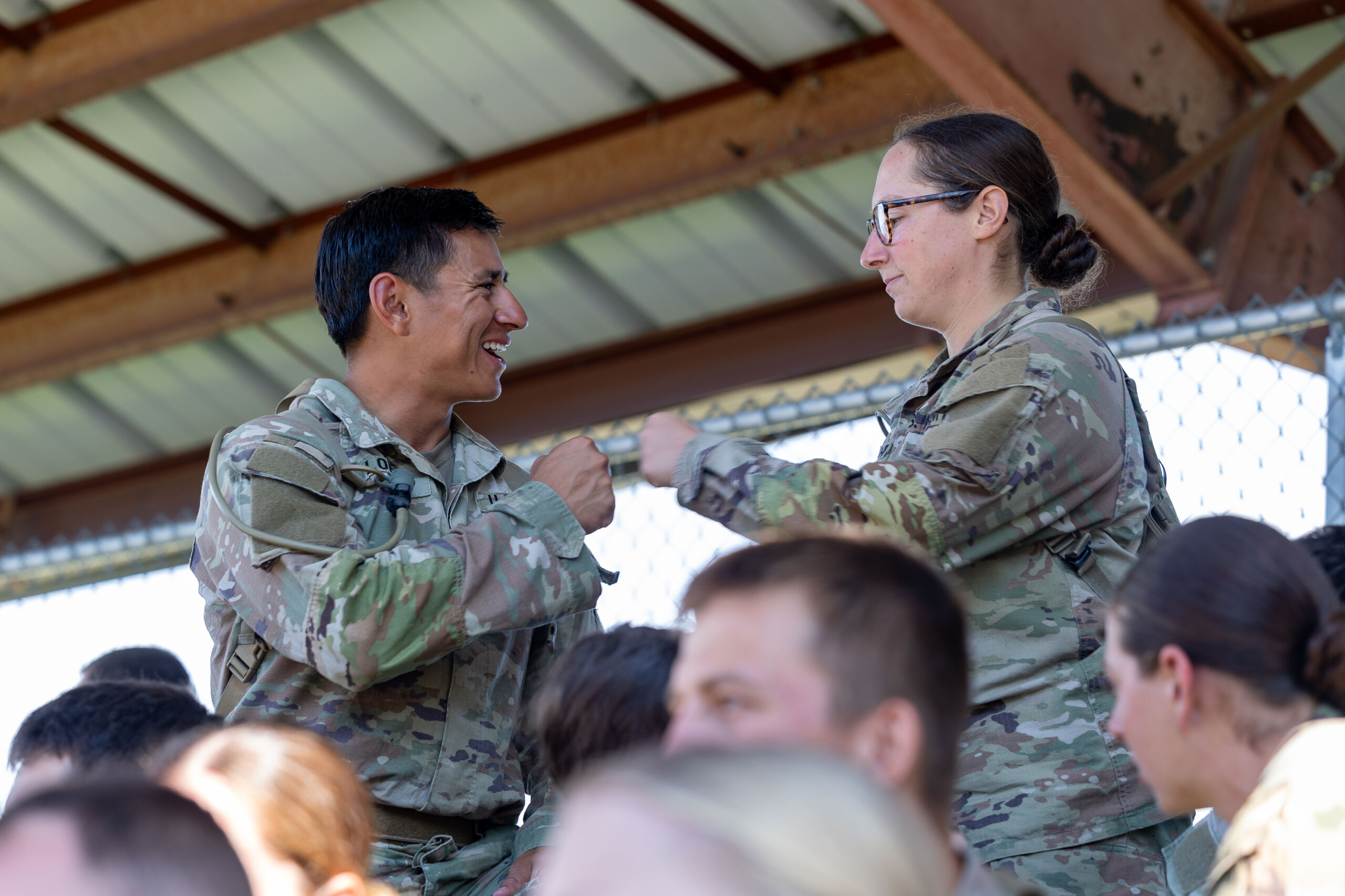
He also found value in offering encouragement that was returned in kind — whether it was “you’ve got this” at the top or a high-five and smile at the bottom. Everyone worked together to overcome the challenge.
Lopez appreciates the opportunity to support younger cadets, who in turn motivate him with their problem-solving skills and diverse backgrounds.
“Just like life, someone’s always there to be by your side, someone’s always there to teach you, and you’re never alone,” Lopez said.




About the Author: Meghan Sawitzke